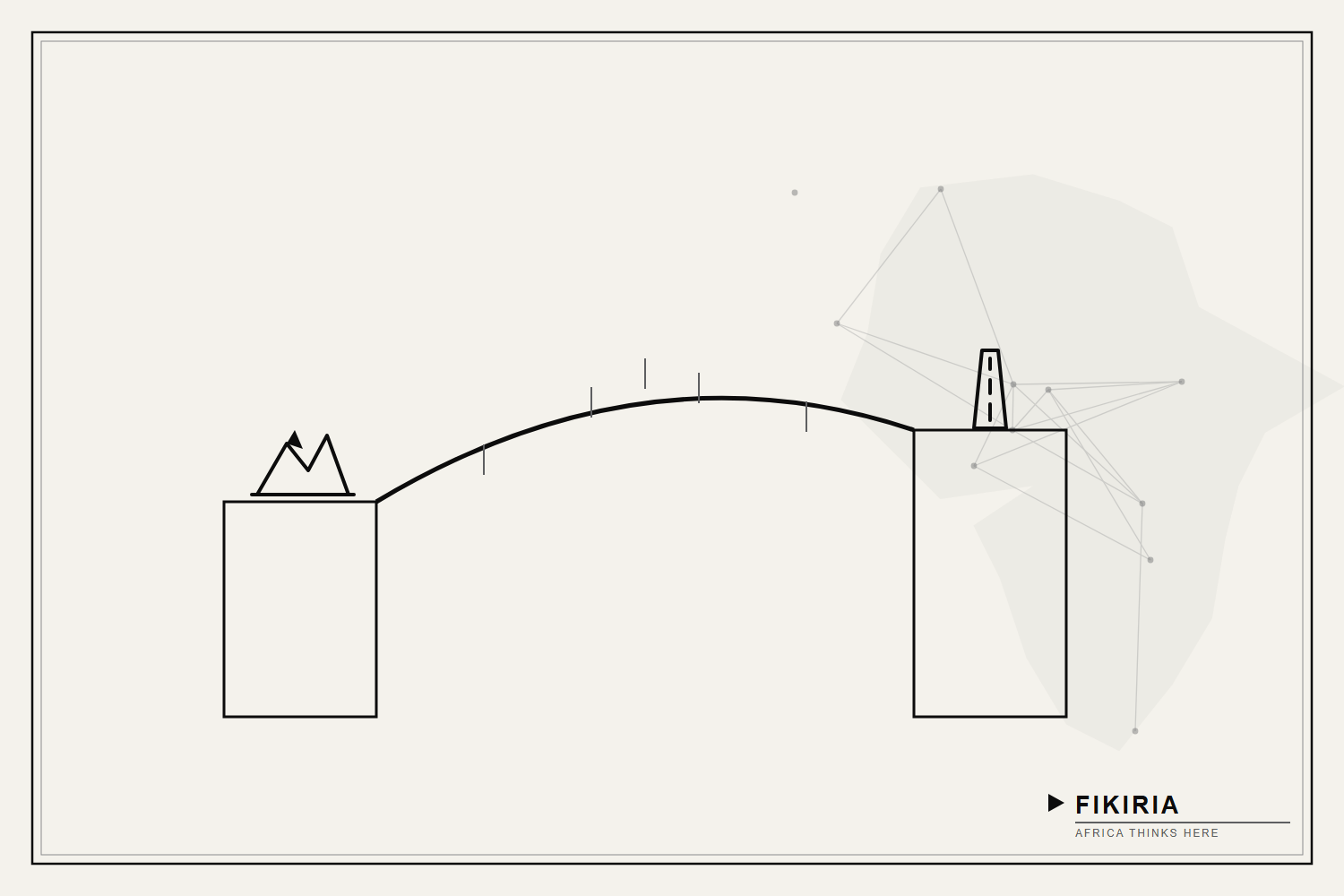
The Democratic Republic of Congo exports more mineral value than almost any economy on the continent, and captures strikingly little of it at home. Metal leaves as concentrate; the margin accrues where the ore is refined, traded and consumed, far from Lualaba. On 26 October 2023, an agreement signed in Washington aimed at one link in that chain — the distance to market. The United States, the European Union, Angola, Zambia, the DRC and financing partners agreed to develop the Lobito Corridor, rehabilitating rail and extending a new line toward Zambia to carry minerals west to the Atlantic. The interesting economics are not in the ribbon-cutting but in the transmission channels: how a shorter route changes prices, productivity and bargaining power inside the Congolese economy.
The Transmission: How a corridor reaches the ledger
A corridor changes an economy through a small number of channels. The first is logistics cost — every dollar shaved from moving a tonne to port widens the margin between the pithead price and the world price, and that gap is where domestic value is either captured or lost. The second is time: faster, more predictable transit reduces working capital tied up in cargo and lowers the risk premium buyers attach to Congolese supply. The European Union’s account of the corridor programme frames it as trade and connectivity infrastructure, which is the honest register — this is a cost-and-reliability play, not a mine.
The takeaway: corridors do their economic work by narrowing the gap between what the miner receives and what the world pays.
The Currency Line: Dollars out, francs in
The DRC’s mineral trade runs on the US dollar, while wages, land, transport labour and local services are paid in Congolese francs. A corridor that lowers dollar freight costs improves the terms of trade for exporters, but the domestic benefit depends on how much of the saved value stays in-country as CDF income — through local haulage, maintenance, services and jobs along the line — rather than leaking abroad. For the Banque Centrale du Congo and the Treasury, more reliable, higher-value export flows can support foreign-exchange earnings; the harder task is ensuring the gains reach franc-denominated livelihoods rather than only dollar balance sheets offshore.
The takeaway: the corridor’s real domestic dividend is measured in francs retained, not only in dollars exported.
The Bargaining Shift: Who gains leverage, who faces new costs
Every infrastructure change redistributes bargaining power. Congolese and Zambian producers with an Atlantic option gain leverage over freight rates on eastern and southern routes, and over buyers who once priced in the country’s distance penalty. But some incumbents lose: hauliers, border operators and inland hubs built around the old routes face new competition, and firms that cannot access the new line may see costs rise relative to those that can. The measurable indicator to track next is not tonnage alone but the spread between domestic and world prices — the clearest reading of whether the corridor is transmitting value into the local economy.
The takeaway: infrastructure rarely lifts everyone at once; it moves bargaining power, and the ledger shows who received it.
So what for an African operator
For a Congolese producer, trader or policymaker, 26 October is a reason to watch prices, not press releases. The decision implication is to model the corridor as a change in logistics cost and reliability, then track whether the pithead-to-world price spread narrows and whether saved value is retained as domestic income. A shorter route to the Atlantic is an opportunity to capture more of each tonne’s worth at home — but only if firms and institutions organise to hold the gain in francs, in jobs and in local capacity, rather than exporting it along with the metal.